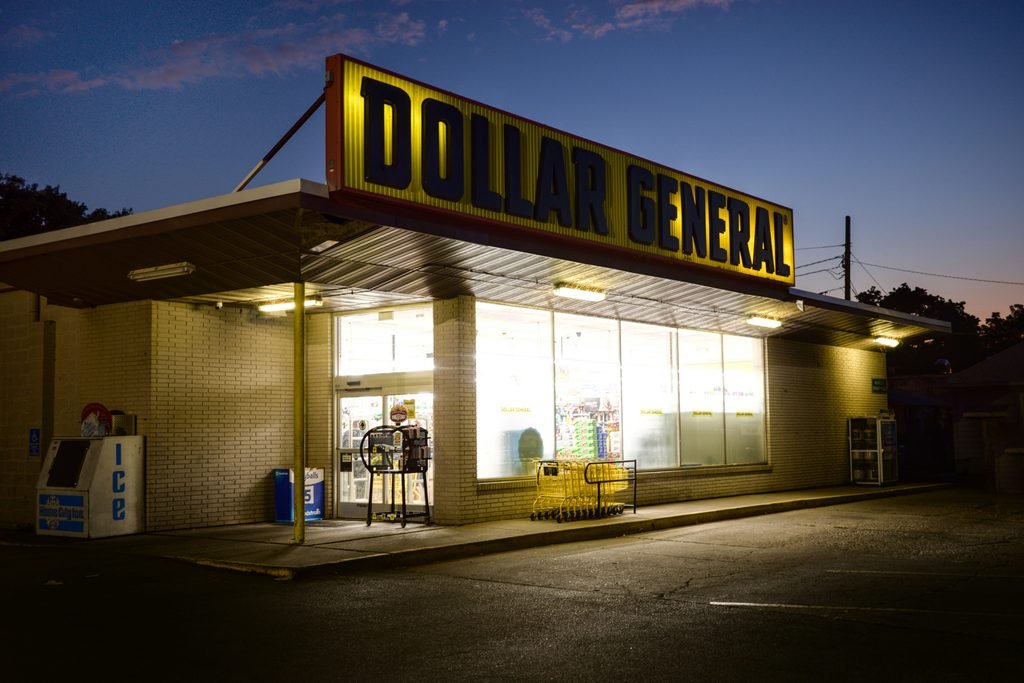
Dollar General (DG) is one of the largest discount retailers in the US. The company sells low-priced Consumable, Seasonal, home, and apparel products, typically $10 or less. Roughly 80% of Dollar General’s stores sit in towns of 20,000 people or fewer, where the nearest alternative is often a meaningful drive away. That footprint is extremely difficult to replicate, making the chain as much a convenience business as a value business.
As of July 31, 2026, Dollar General operated 21,148 Dollar General, DG Market, DGX, and pOpshelf stores in the United States and Mi Súper Dollar General stores in Mexico. Headquartered in Goodlettsville, TN,
About This Page
Stockmark101.com is a free educational site focused on explaining how stocks and markets work. Company write-ups reflect general market commentary and publicly available information and are used to illustrate business fundamentals and market behavior — not personalized investment advice.
| Share Price | $126.8 | 10/27/2026 | Sector | Consumer | |
| Market Cap | $28.3 | Large Cap | Industry | Discount | |
| P/E Ratio | 16.48 | Op Margin | 6.81% | Dividend | 1.84% |
| Year | 2024 | 2025 | 2026 | Historical | Volatility |
| Annual EPS | $7.55 | $5.11 | $6.85 | Beta | 0.23 |
| Revenue | $38.6B | $40.6 | $42.7B | Category | Conserv. |
Historical Volatility categories (Conservative, Moderate, and Aggressive) are based on beta, which measures a stock’s historical price volatility relative to the overall market. Company metrics are current as of the publication date. Historical Revenue and Annual EPS reflect reported fiscal-year results. All information is provided for educational purposes only and should not be considered investment advice or recommendations.
Keys for Success
Dollar General has spent the past few years quietly rebuilding a business the market had largely written off. The discount retailer stumbled badly through 2023 and 2024 due to inventory problems, shrink, and a stretched core customer base. Management then slowed unit growth, invested in store labor, and leaned on markdowns and private label. The result has been a steady rebuild, and the fundamentals support that view.
In 2Q2026, same-store sales rose 3.5%, reflecting a 2% increase in customer traffic and a 1.5% rise in average transaction amount. The quarter marked the fifth consecutive period of traffic growth and the sixth straight quarter of positive comparable sales across all four merchandising categories. Management continues to simplify store processes, improve supply-chain productivity, optimize inventory, and expand AI use across enterprise workflows.
The company continues to plan roughly 4,730 real estate projects in fiscal 2026, including about 450 new U.S. stores, 10 stores in Mexico, 2,000 Project Renovate remodels, 2,250 Project Elevate remodels, and around 20 relocations.
The company continues to expand myDG Delivery alongside DoorDash and Uber Eats, with delivery available through the majority of its store base. In second-quarter fiscal 2026, delivery contributed an estimated 40 basis points to comparable-sales growth.
Dollar General’s progress on shrink, damages, and inventory discipline is strengthening its margin recovery. In 2Q2026, gross margin expanded 127 basis points to 32.6%. Tariff refunds after related reinvestments contributed about 81 basis points. The company ended 2Q2026 with $1.59 billion of cash, up from $1.28 billion a year earlier, while long-term obligations declined to about $4.56 billion from $5.73 billion.
Keys for Concern
Dollar General’s expense base continues to constrain the pace of operating-margin improvement. In 2Q2026, SG&A expense increased 5.3% to $2.91 billion. This means further margin expansion will depend heavily on continued sales growth and gross-margin gains. In 2Q2026, transportation costs increased, and fuel expense was higher than management anticipated.
Dollar General’s core low-income customers remain financially constrained, creating risk to discretionary demand and the sales mix. Management noted that higher and more volatile fuel prices are forcing many customers to prioritize purchases, consolidate trips, and focus on affordability. Dollar General’s sales mix remains structurally weighted toward consumables, which typically carry lower gross margins than seasonal and home products.
Dollar General operates in a highly competitive value-retail market where everyday pricing and promotions can quickly influence traffic and retention. The company used part of its 2Q tariff refunds to fund targeted promotions and lower everyday prices, and management plans to maintain an offensive promotional cadence in the back half of fiscal 2026.
Mark Notes
Discount retailers (see previous reports on Five Below (FIVE) and Ross Stores (ROSS)) are a leading industry, as core inflation reaccelerates and consumers become more selective. This trade-down behavior works in Dollar General’s favor. The chain gains share precisely when households tighten up, and we are in one of those stretches.
Management’s move to cut roughly 1,500 SKUs and focus on faster-moving products may support margins and help smooth future cash generation if execution stays on track. Dollar General has reported four consecutive earnings beats averaging more than 19%. Plus, management raised guidance that extends well beyond a one-time tariff benefit. The company pays a 1.84% dividend.
This article is for general informational and educational purposes only. It is not intended as financial advice, investment guidance, or a recommendation to buy or sell any security. The content reflects publicly available information and broad market commentary. Readers should conduct their own research and consult a licensed financial professional before making investment decisions.
Leave a Reply