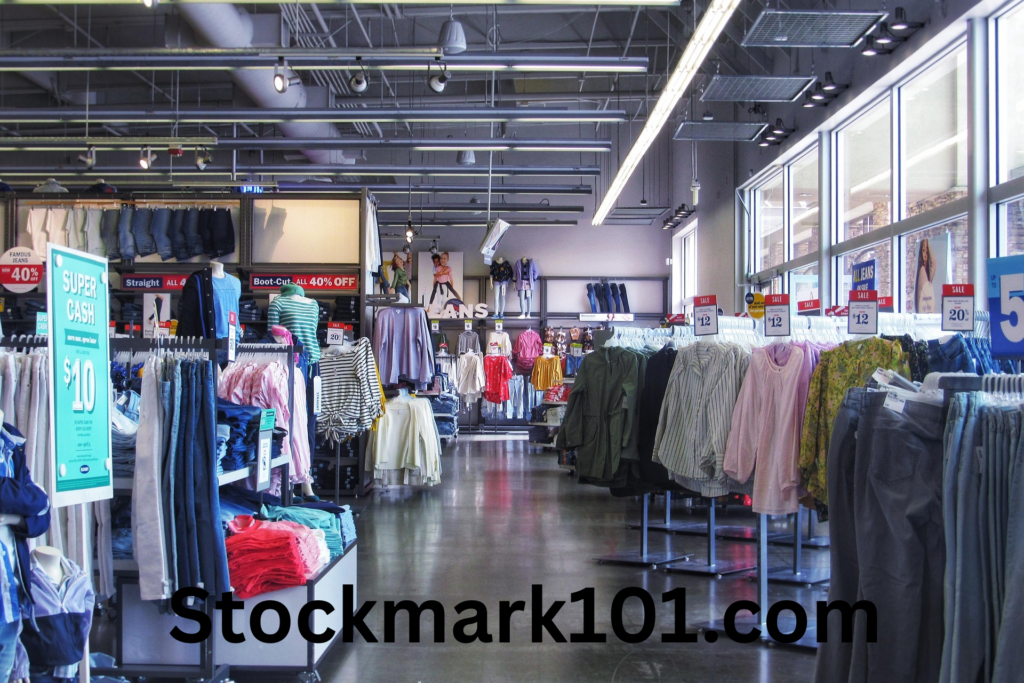
Ross Stores (ROST) operates as an off-price retailer of apparel and home accessories. The company operates its stores under the Ross Dress for Less (Ross) and dd’s DISCOUNTS names. The company’s stores are located mostly in community and neighborhood shopping centers in heavily populated urban and suburban areas.
Ross Stores primarily offers in-season, branded, and designer apparel, footwear, accessories, and other home-related merchandise. This format primarily targets middle-income households. Prices offered at Ross are generally 20% to 60% below the regular prices of most department and specialty stores. The company is based in Dublin, CA.
About This Page
Stockmark101.com is a free educational site focused on explaining how stocks and markets work. Company write-ups reflect general market commentary and publicly available information and are used to illustrate business fundamentals and market behavior — not to provide personalized investment advice.
| Share Price | $214 | 7/7/2026 | Sector | Consumer | |
| Market Cap | $69.8B | Large Cap | Industry | Retail | |
| P/E Ratio | 29.9 | Op. Margin | Dividend | 0.84% | |
| Year | 2023 | 2024 | 2025 | Historical | Vol |
| Annual EPS | $5.59 | $.6.36 | $6.69 | Beta | .88 |
| Revenue | $20.3B | $21.1B | $22.7B | Category | Conservative |
Historical Volatility categories (Conservative, Moderate, and Aggressive) are based on beta, which measures a stock’s historical price volatility relative to the overall market. Company metrics are current as of the publication date. Historical Revenue and Annual EPS reflect reported fiscal-year results. All information is provided for educational purposes only and should not be considered investment advice or recommendations.
Keys for Success
Ross Stores’ off-price model relies on purchasing branded, in-season merchandise at discounts and frequently rotating its assortments, which can keep shoppers engaged across economic cycles. The company targets value-conscious shoppers and benefits from a large, flexible buying organization. The availability of closeout product remains outstanding. Vendors are increasingly reaching out with early calls on opportunistic goods, supporting the company’s ability to keep stores stocked with compelling values.
Ross Stores has outperformed the industry over the past six months. The company continues to benefit from solid demand for value-driven merchandise, delivering 21% sales growth and 17% comparable sales growth in 1Q26. Management attributes the comp primarily to higher transactions and a growing customer count.
Profitability also benefited from scale, as 1Q26 operating margin expanded 120 basis points to 13.4%, supported by an 85-basis-point merchandise margin improvement and 60 basis points of occupancy leverage. Results were broad-based across merchandise and geographies, with ladies and cosmetics among the best-performing areas.
Ross Stores has remained consistent in executing its store-expansion plans. In 1Q26, the company opened 13 Ross Dress for Less and four dd’s DISCOUNTS locations. Management continues to plan for about 5% unit growth in 2026 with roughly 110 openings, comprised of about 85 Ross and 25 dd’s, excluding planned closures or relocations of 10-15 older stores.
Solid financial flexibility, disciplined capital allocation, and ongoing share repurchases highlight Ross Stores commitment to shareholder returns. Ross Stores ended 1Q26 with cash of $4.13 billion. Operating cash flow was $836 million in the quarter, while capital spending was $209 million, reflecting investment in new stores and the supply-chain network. Long-term debt was $776.8 million, and the company repaid $500 million during the quarter.
Keys for Concern
Ross Stores continues to face uncertainty due to tariffs and related supply chain costs. Elevated fuel prices to increase freight costs, both ocean and domestic, in the second quarter and the fiscal year. The company ended the 1Q26 with merchandise inventory up 12%. Higher inventory can raise markdown risk if demand slows or the company has to clear seasonal goods faster than planned.
Management noted some 1Q26 sales benefited from higher spending tied to tax refunds. If that benefit fades and budgets tighten, traffic-driven comps can moderate. Ross operates in a fragmented retail market and competes with other off-price retailers, department stores, specialty chains, discount stores, and outlet channels.
Mark Notes
Easing gasoline prices could improve consumers’ disposable income and support spending across discretionary and value-oriented retail categories. Ross Stores is attracting new shoppers across demographics while improving the in-store experience. Its merchandise offering is expanding while securing greater access to opportunistic branded inventory. Same-store sales growth averaged 5.4% over the past two years, showing it’s bringing new and repeat shoppers into its stores. Market-beating returns on capital illustrate that management has a knack for investing in profitable ventures. The company pays a $1.78 dividend with a yield of 0.83%.
This article is for general informational and educational purposes only. It is not intended as financial advice, investment guidance, or a recommendation to buy or sell any security. The content reflects publicly available information and broad market commentary. Readers should conduct their own research and consult a licensed financial professional before making investment decisions.
Leave a Reply